You have seen prices somewhere between $99 and $500 and wondered whether any of it makes sense. Most pricing articles give you a range wide enough to park a truck in and call it a guide. They do not explain why the same drip costs $150 at one clinic and $325 at another, or what you are actually giving up when you choose the cheaper option.
This guide breaks down how much IV therapy costs by drip type in 2026, what drives the price gap between providers, and how to know when you are getting real value versus paying for a nicer chair.

Key Takeaways
- Basic IV hydration costs $99 to $175 per session. A Myers Cocktail runs $149 to $275. NAD+ therapy starts around $249 for a lower dose and can exceed $1,000 for high-dose protocols.
- The drip formula is the largest single driver of IV therapy cost. Clinic type, location, and provider credentials account for the rest.
- Elective IV therapy is almost never covered by health insurance. HSA and FSA accounts may apply when a physician orders treatment for a documented medical reason.
- A physician-led clinic costs more than a walk-in IV bar. The difference is clinical oversight, formulation quality, and a health assessment before the needle goes in.
How Much Does IV Therapy Cost by Drip Type?

The formula in the bag determines most of what you pay. Here is what you can realistically expect to spend per session in 2026:
Add-ons push the total higher by $25 to $120 per item. At Palm Med Wellness, a glutathione push adds $120, extra Vitamin C adds $49 to $99 depending on dose, and additional saline adds $25. Standalone injections (B12, Biotin, B-Complex, Vitamin D) start at $25.
A standard session at a physician-led clinic in 2026 will most often run $149 to $259. NAD+ sits in its own category because the raw compound is expensive at pharmaceutical grade, which is why the IV infusion cost per session climbs so sharply compared to vitamin-based drips.
At Palm Med Wellness, our IV therapy packages start at $119 for a High-Dose Vitamin C drip and reach $259 for our Pure Immunity and Active Immunity Drips, administered by a physician-supervised team with over 14 years of clinical experience.
What Actually Drives the Price Difference?
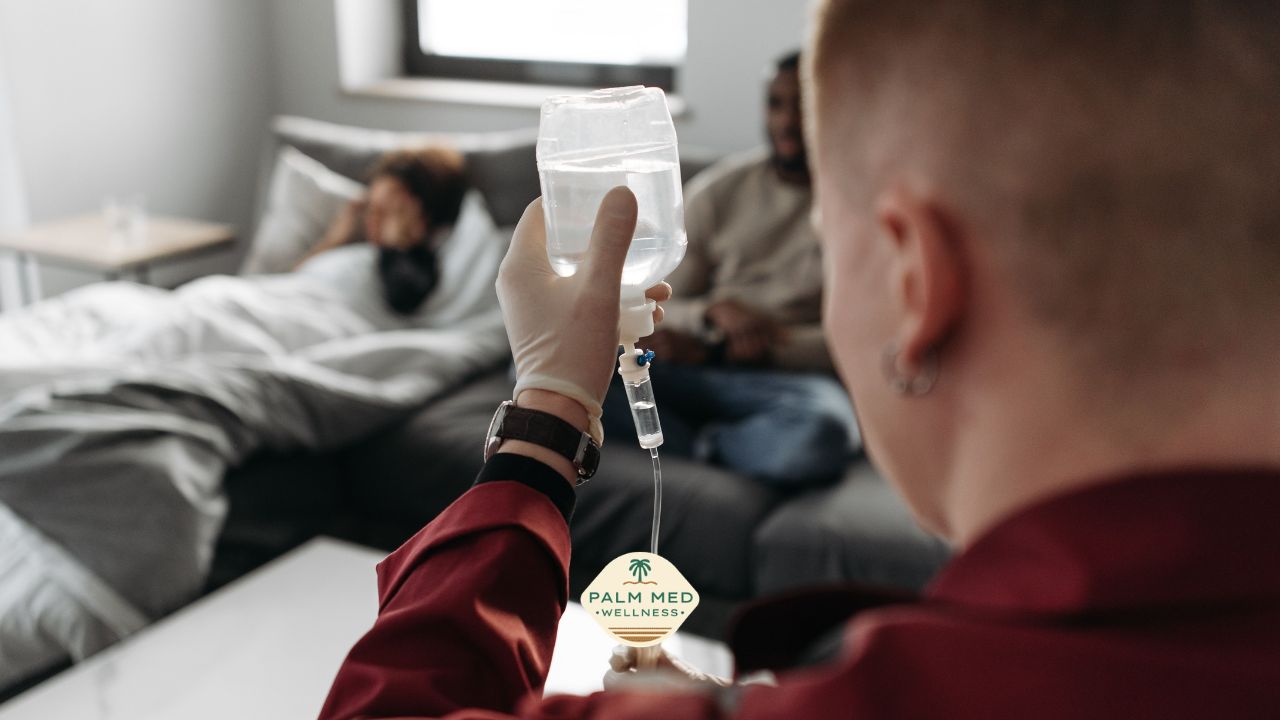
The same Myers Cocktail can cost $175 at one clinic and $325 at another. Here is what accounts for that gap.
The Formula and Ingredient Quality
Not all IV bags are compounded equally. A basic saline drip costs a clinic very little to produce. As you add pharmaceutical-grade magnesium, high-dose Vitamin C, B-complex vitamins, amino acids, and antioxidants like glutathione, the cost of goods climbs steeply.
NAD+ is the most expensive ingredient because the compound costs clinics $100 to $300 or more per vial before any overhead is factored in. A standard Vitamin C drip at 5 to 10 grams costs a fraction of what a 25-gram or 50-gram therapeutic protocol costs.
Provider Credentials and Clinical Oversight
In some states, IV therapy can be administered by paramedics or licensed practical nurses under remote physician oversight. In others, a registered nurse must administer under direct supervision. The regulatory floor varies, and so does what you actually get.
At Palm Med Wellness, every patient completes a health assessment before their first drip. Johanna Calderon, MSN, APRN, FNP-C, oversees treatment protocols with board-certified specialist involvement. The Office of Dietary Supplements at the NIH confirms that intravenous Vitamin C reaches significantly higher blood concentrations than oral intake, but that benefit depends entirely on proper dosing, which requires clinical judgment, not a menu selection.
Location and Overhead
Major metro areas (New York, Miami, Los Angeles) charge 30 to 50 percent more than mid-sized markets for the same drip. A Myers Cocktail that runs $175 in Palm Beach Gardens can reach $300 or more in Manhattan. Mobile IV services add a travel fee, typically $25 to $100, on top of the base session price.
Does Health Insurance Cover IV Therapy?
For elective wellness IV therapy, the answer is almost certainly no. Insurance does not cover sessions at IV bars, med spas, or wellness clinics when the purpose is general hydration, recovery, or nutrient replenishment.
There are limited exceptions where IV therapy may be covered:
- Medically necessary hydration: Severe dehydration caused by illness, chemotherapy side effects, or a documented inability to tolerate oral fluids.
- Iron infusions: For diagnosed iron deficiency anemia unresponsive to oral supplementation.
- Chemotherapy or biologic infusions: Administered under a formal treatment plan for a diagnosed condition.
- IV antibiotics: For infections requiring intravenous delivery.
The distinction insurers draw is medical necessity. A physician must document that IV delivery is clinically required for a specific diagnosed condition. Per IRS guidelines on HSA-eligible expenses, the same logic applies to Health Savings Accounts and Flexible Spending Accounts.
Can You Use HSA or FSA for IV Therapy?
More flexibility exists here than most people assume. HSA and FSA accounts can cover IV therapy when a licensed physician orders it for a medical purpose and provides documentation. Without a prescription or letter of medical necessity, most administrators will decline the claim. If your physician recommends IV therapy as part of a treatment plan, request written documentation before your session.
How Much Does IV Therapy Cost Relative to What You Get?

Hydration therapy pricing only makes sense when you understand what you are comparing. A drip at a physician-led clinic is not the same product as one administered by a walk-in nurse at a franchise bar, even when the ingredient list looks identical on paper.
The National Institutes of Health confirms that adequate hydration is fundamental to immune function, organ health, and metabolic regulation. When you are depleted, oral supplementation cannot replicate the speed of intravenous delivery. The gut absorbs what it can.
An IV bypasses digestion entirely. That distinction matters most when the formula is complex and the dose is therapeutic. A $119 Vitamin C drip targeting immune support and a $259 Pure Immunity drip combining multiple nutrients with high-dose glutathione are not interchangeable products.
Match the drip to your actual need. If you are fighting fatigue, a B-complex and amino acid drip will serve you better than a beauty formulation. If you are coming down with something, high-dose Vitamin C is the right tool. Paying more for a formulation you do not need is wasted money. So is paying less for a drip that does not address your concern.
Factor in frequency. A single session is not a wellness protocol. Most patients see sustained results on a consistent schedule: weekly sessions during an initial loading phase, then monthly maintenance. Read more about how often you should get IV therapy to plan a schedule that fits your goals. Our current specials include seasonal pricing that makes consistent treatment more accessible.
Ask for the full price upfront. A $149 base drip with a glutathione push, extra Vitamin C, and a B12 injection can approach $300 before you leave the chair. Know what is in the bag and what you are paying before the session begins.
Why the Provider Matters as Much as the Price
IV therapy used as a quick pick-me-up is one thing. Used as a clinical tool integrated into a real health protocol alongside medical weight loss, metabolic recovery, or post-procedure nutrition, it is something different. For patients recovering from procedures like ESG surgery, IV therapy is not optional. It is a support mechanism during a period when the digestive system cannot reliably absorb nutrients by conventional means.
The American Society for Parenteral and Enteral Nutrition recognizes intravenous nutrient delivery as clinically validated in appropriate patient populations, with oversight by qualified practitioners essential for safety and efficacy.
At Palm Med Wellness, the process starts with a health assessment before any formulation is chosen. Over 6,000 patients across 14 years have gone through that process at our Palm Beach Gardens clinic. If you have questions about which drip fits your situation, our frequently asked questions page covers the most common concerns in plain language.
The Real Answer on IV Therapy Cost
The number that matters is not the base session price. It is what is inside that price: the formulation quality, the clinical assessment behind the protocol, and the oversight of the person administering the drip. A $149 session at a physician-led clinic and a $149 session at an unmonitored walk-in bar are not the same purchase.
Know what you are buying before you compare prices. When you are ready, book your session at Palm Med Wellness and get a clinical assessment before your first drip.
Frequently Asked Questions
How Much Does IV Therapy Cost?
IV therapy costs between $99 and $350 per session for standard wellness drips including hydration, Myers Cocktail, and immune formulas. NAD+ therapy runs $249 to over $1,000 depending on dose. Your final cost depends on the formula, clinic type, location, and any add-ons selected.
How Much Does IV Hydration Cost?
Basic IV hydration using saline costs $99 to $175 per session. Comprehensive hydration drips with electrolytes, B vitamins, and minerals run $149 to $250. Mobile IV services typically add a travel fee of $25 to $100 on top of the base hydration therapy pricing.
Does Health Insurance Cover IV Therapy?
Standard health insurance does not cover elective IV therapy at wellness clinics or IV bars. Coverage may apply when a physician documents medical necessity, such as severe dehydration, iron deficiency anemia, or IV antibiotics for a diagnosed condition. HSA and FSA accounts may apply with a physician's written prescription.
How Much Does a Vitamin IV Drip Cost?
Vitamin IV drip cost ranges from $119 for a High-Dose Vitamin C infusion to $259 or more for comprehensive multi-nutrient formulas. At Palm Med Wellness, vitamin IV cost starts at $119 and is listed transparently with no hidden fees.