Can losing weight cure sleep apnea?
Sometimes. More often it reduces the severity substantially, and for some patients that's enough to change how the condition is treated.
It is not guaranteed, and there's one part of this that matters more than everything else — so it's at the top rather than the bottom.
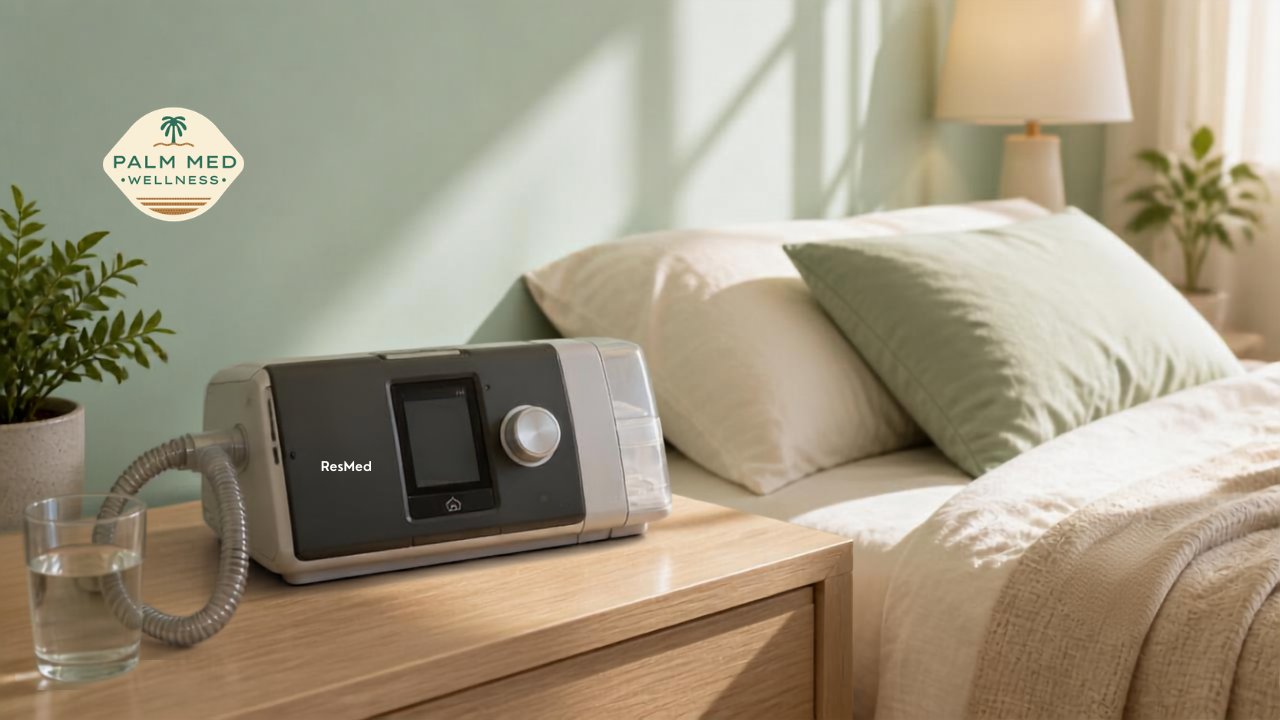
Do not stop using CPAP on your own
Feeling more rested is not evidence that sleep apnea has resolved. Untreated obstructive sleep apnea carries real cardiovascular risk, and it is genuinely not something a patient can assess from how they feel in the morning.
The only way to know is a repeat sleep study, after the weight loss, read by the physician managing your apnea. If that study shows resolution, coming off therapy is a decision they make with you. If it doesn't, you're still in a much better position than you were — just not off the machine yet.
With that established, here's how the two are connected.
Why weight and sleep apnea are linked
Obstructive sleep apnea happens when the upper airway collapses during sleep, briefly interrupting breathing — sometimes dozens of times an hour.
Weight contributes in two ways. Fat deposits around the neck and throat narrow the airway and make collapse more likely. Separately, abdominal weight reduces lung volume, and lower lung volume makes the airway less mechanically stable overnight.
Both of those improve as weight comes down. Neither is the only factor.
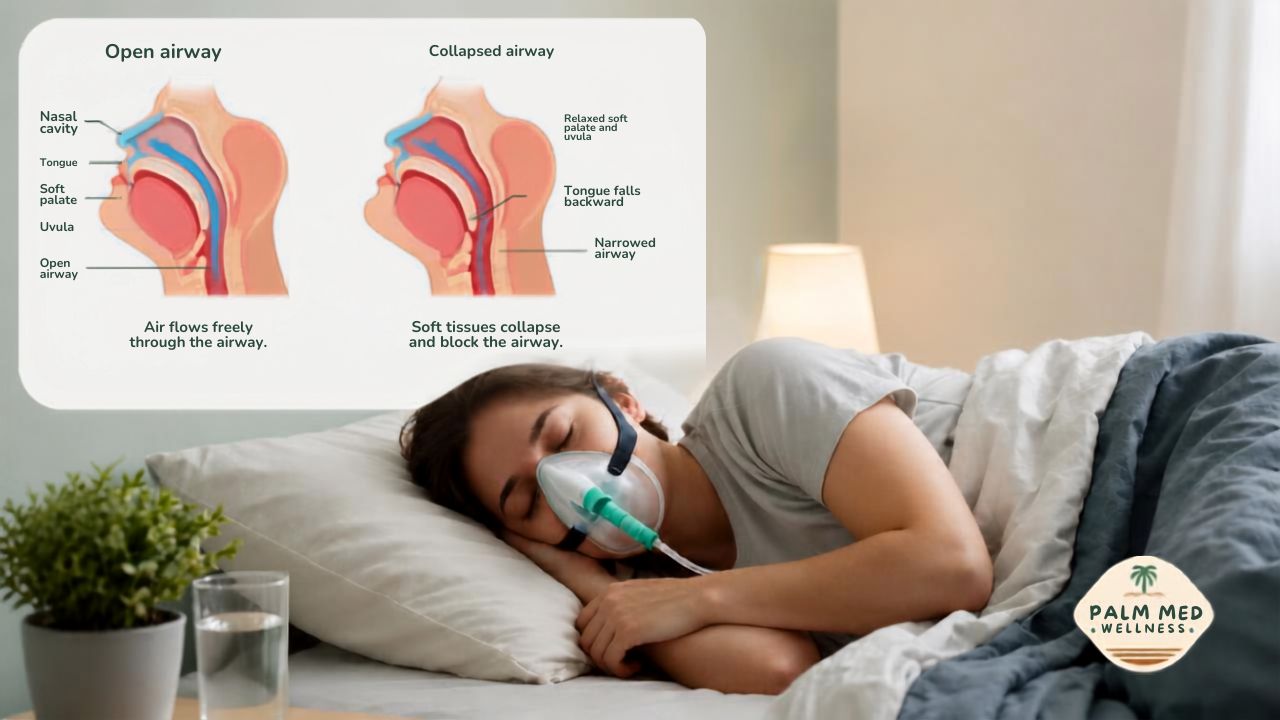
What weight loss does and doesn't change
What it can change: apnea severity, often substantially. Research consistently finds that meaningful weight loss lowers the number of breathing interruptions per hour, and that larger weight reductions tend to produce larger improvements. Some patients drop below the threshold at which treatment is recommended.
What it can't change: your anatomy. Jaw structure, tongue size, tonsils and airway shape all contribute to sleep apnea, and none of them respond to weight loss. This is why two patients can lose the same amount of weight and get different results — and why nobody can promise the outcome in advance.
Who tends to do best: patients whose apnea is more clearly weight-driven, those starting from moderate rather than severe disease, and those who lose more weight. Patients with significant anatomical contributors, or very severe apnea, more often improve without resolving.
What about GLP-1 medications specifically?
Tirzepatide has been studied specifically in patients with obesity and moderate-to-severe obstructive sleep apnea, and produced significant reductions in apnea severity. That's a genuine development — it's the first time a weight-loss medication has been trialled with sleep apnea as the endpoint rather than as an incidental benefit. A recent review summarises where the evidence currently stands.
It doesn't change the rule above. Improvement measured in a trial is still improvement that needs confirming in your sleep study before your treatment changes.
If you're weighing tirzepatide or semaglutide, our physician-managed GLP-1 program explains how we evaluate candidates and manage dosing.
If the apnea does resolve
Two things worth planning for.
Weight regain can bring it back. If you come off therapy and weight returns, apnea can return with it, often quietly. Agree in advance with your physician what would trigger re-testing.
Keep the diagnosis on your record. It's relevant to future surgery, anaesthesia and some medications, whether or not you're currently being treated for it.
The realistic version
If you're carrying significant excess weight and using a machine every night, medically supervised weight loss is worth pursuing on its own merits — cardiovascular, metabolic, joints, energy. Whether it changes your apnea treatment is a question for a sleep study.
And if you're already on a GLP-1 and the scale has stopped, that's a separate problem with its own answers — we've written about plateaus here.
Any clinic that promises you'll get off your machine is telling you something they cannot know.
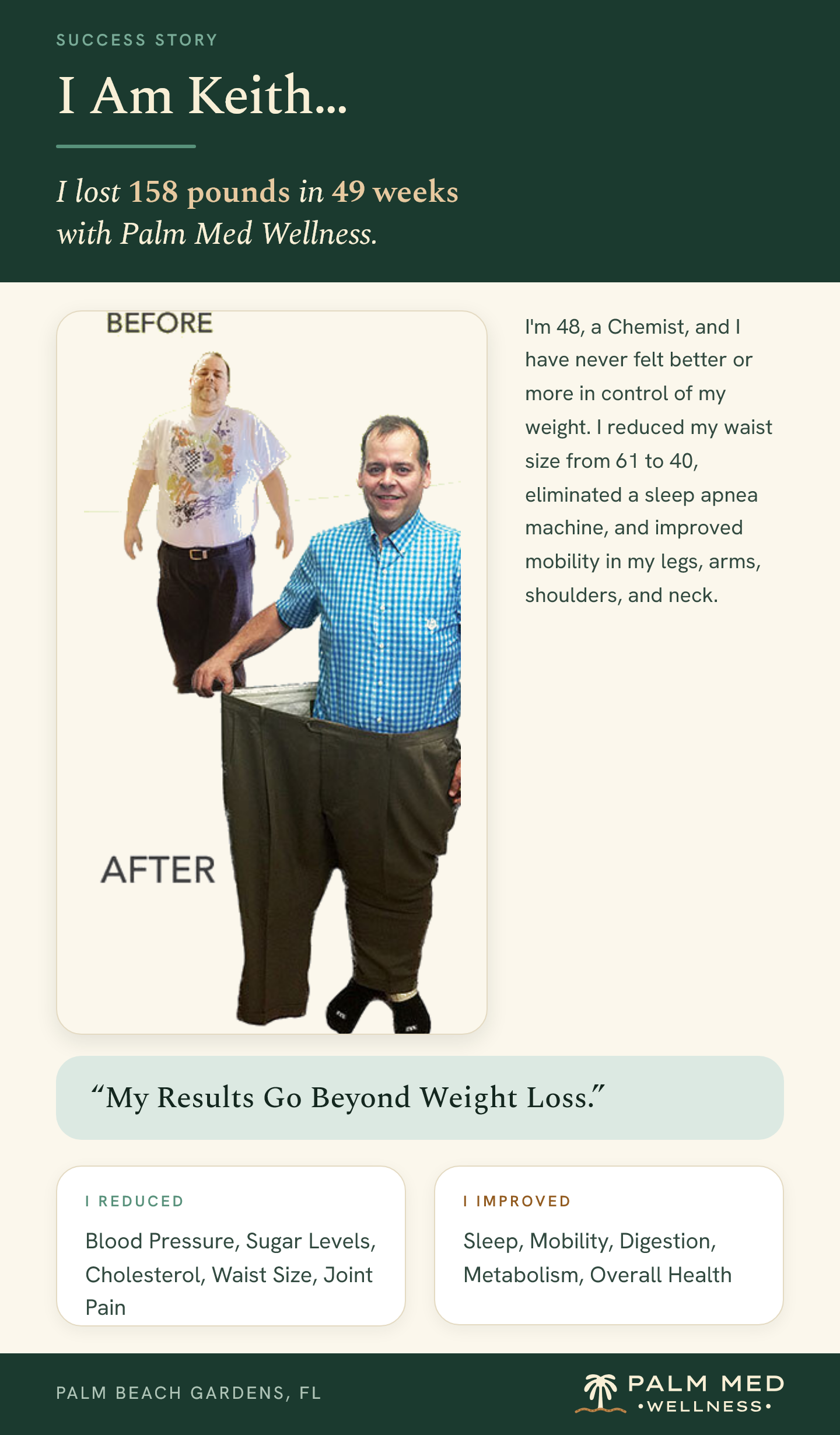
One of our patients, Keith, came in at a 61-inch waist and using a sleep apnea machine. Forty-nine weeks and 158 pounds later, he wasn't. His results are his own and are not typical — his story is here.
If sleep apnea is part of why you're considering weight loss, that's worth saying at your first appointment — it changes what we look at. Book a consultation with Dr. Mark Amorosino, board certified in obesity medicine.
Frequently asked questions
Is sleep apnea reversible with weight loss? For some people, yes. Weight loss reliably reduces the severity of obstructive sleep apnea, and some patients drop below the threshold at which treatment is recommended. But it isn't guaranteed, because anatomy also contributes — and the only way to know your own answer is a repeat sleep study after the weight loss.
Can weight loss cure sleep apnea? "Cure" is a stronger word than the evidence supports for most patients. Substantial improvement is common; complete resolution happens but is less common, and is most likely in people whose apnea is clearly weight-driven and who started from moderate rather than severe disease.
Does sleep apnea go away with weight loss? It can, and it can also come back if weight returns. If your apnea does resolve, agree with your physician in advance what amount of weight regain would prompt re-testing — this often happens quietly rather than obviously.
How much weight do I need to lose to improve sleep apnea? There's no single threshold that applies to everyone. Larger weight reductions generally produce larger improvements, but where your own threshold sits depends on how much of your apnea is weight-driven versus anatomical. This is a question for the physician managing your apnea, with your sleep study in front of them.
Can I stop using CPAP after losing weight? Not on your own, and this is the most important point on this page. Feeling more rested is not evidence the apnea has resolved, and untreated obstructive sleep apnea carries real cardiovascular risk. Coming off therapy is a decision made with the physician managing your apnea, on the basis of a repeat sleep study.
Can sleep apnea cause weight loss? It generally works the other way — untreated sleep apnea tends to make weight loss harder, by disrupting sleep quality and the hormones that regulate appetite. If you're losing weight unintentionally, that warrants medical attention for reasons unrelated to apnea.
Do GLP-1 medications help sleep apnea? Tirzepatide has been studied specifically in patients with obesity and moderate-to-severe obstructive sleep apnea and produced significant reductions in apnea severity. That's a genuine development. It doesn't change the rule above: improvement in a trial still needs confirming in your own sleep study before your treatment changes.
Does insurance cover weight loss treatment for sleep apnea? Coverage varies by plan. A documented sleep apnea diagnosis sometimes strengthens a case for coverage of weight-loss treatment, since it's a recognised obesity-related condition. Ask your plan what documentation it requires.